Illustration

Commissioned pieces, storyboards, comics, drawrings, and sketches.

Registrars and host servers

I made some sketches to work out a visual explanation of the components of a new website for non-technical people. What are Domain Registrars, Hosting Companies and web designers all for? (You might ask)

What do I get for my money? (You might ask)

You need to register the domain name. The registrar keeps your ownership of the domain on record, like a deed at the county courthouse. You need a functional, attractive site. You might build it yourself, or get an expert to do it for you, similar to a contractor building a house. You need hosting for your site, which is the internet-connected computer (the “server”) the site is stored on. This is the physical property that the registrar will direct people to.

How will people find me? (You might ask)

I’ll put your domain name into my browser. My computer will ask around, “where is this address?” The registrar has spread the word about where to find the computer that hosts your site, and directs my request to that server. The server fetches your homepage off its hard drive and shows it in my browser.

I click a link on your site, and those same steps all repeat for another site, in the blink of an eye.

Drawing of a tire tool in action

The Cobra tire tool instruction pictures weren’t clear enough for me to understand what made the tool unique, so I made my own drawing.

crude drawing of a tire being demounted with the cobra tire tool

drawing for an instructable

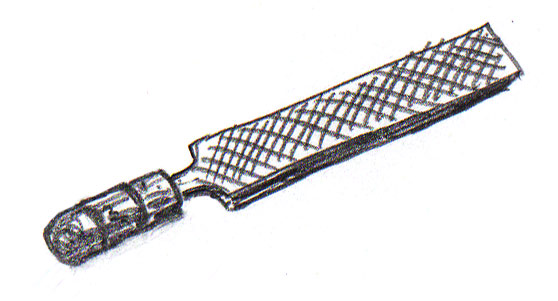
instructions on filing the cog

I’m making drawings to explain simple bike stuff, without getting hung up on the drawing too much. This is the original for the Instructable on how to reuse a cassette cog.

 I like the file

Carradice bike saddlebag drawings

Saint Edward Abbey

Edward Abbey drawing as a saint with a halo

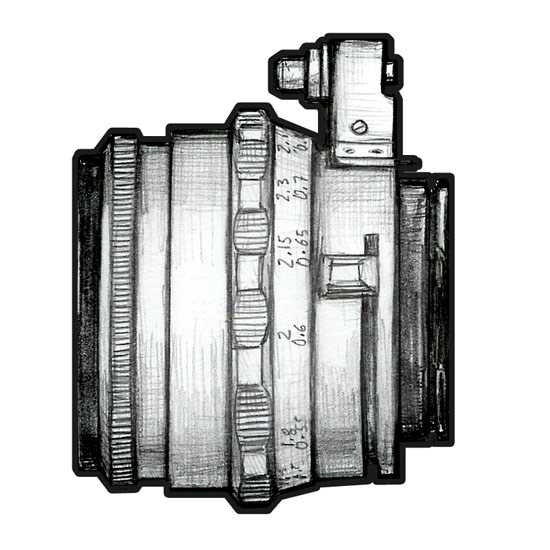
Zeiss Jena Biotar 58/2.0 – Exakta lens drawing

A pencil study (with digital rectification) for a poster of old Zeiss lenses one can use with Olympus PEN Sony Nex cameras.

I’ve had this lens for a long time, and exposed a lot of film with it. It feels really natural to use it on a digital camera, and it made me realize that the lens makes the image. A camera is just a light-tight box.

Old manual prime lenses are great choices for newer large sensor LED digital cameras like micro four-thirds (m4/3) and the Sony Nex. Adapters are available for many lens mount standards, and most cost about $30 on eBay.

Legacy lenses act like longer lenses on digital cameras, because the sensors are smaller than a 35mm negative and cut a smaller rectangle out of the lens image. A micro 4/3 sensor is 1/4 the area of a 35mm negative, half as tall and half as wide, and effectively doubling the length of the lens. The Nex is about 1/2 the area of a 35mm frame, so its apparent magnification is 1.5, and a lens is equivalent to one half again as long, instead of double the length.

Because of that effect, 58mm Zeiss Biotar acts like a 116mm lens on the PEN, and like an 87mm lens on the Nex, which is a nice portrait length. The 75mm Biotar is a legendary lens, and goes for ~$800 on eBay. This little guy can usually be had for ~$50. The only lens I like better than this one on the Sony is the Angenieux 135.

cat sketch

cat sketch, originally uploaded by BikeTinker.

St. HST

St. HST, originally uploaded by BikeTinker.

Hunter S. Thompson… saint.

I’m working on a series of prints of dead celebrities whose work I identify with. People who are not necessarily considered saintly, like Johnny Cash, Joe Strummer… and Hunter S. Thompson.

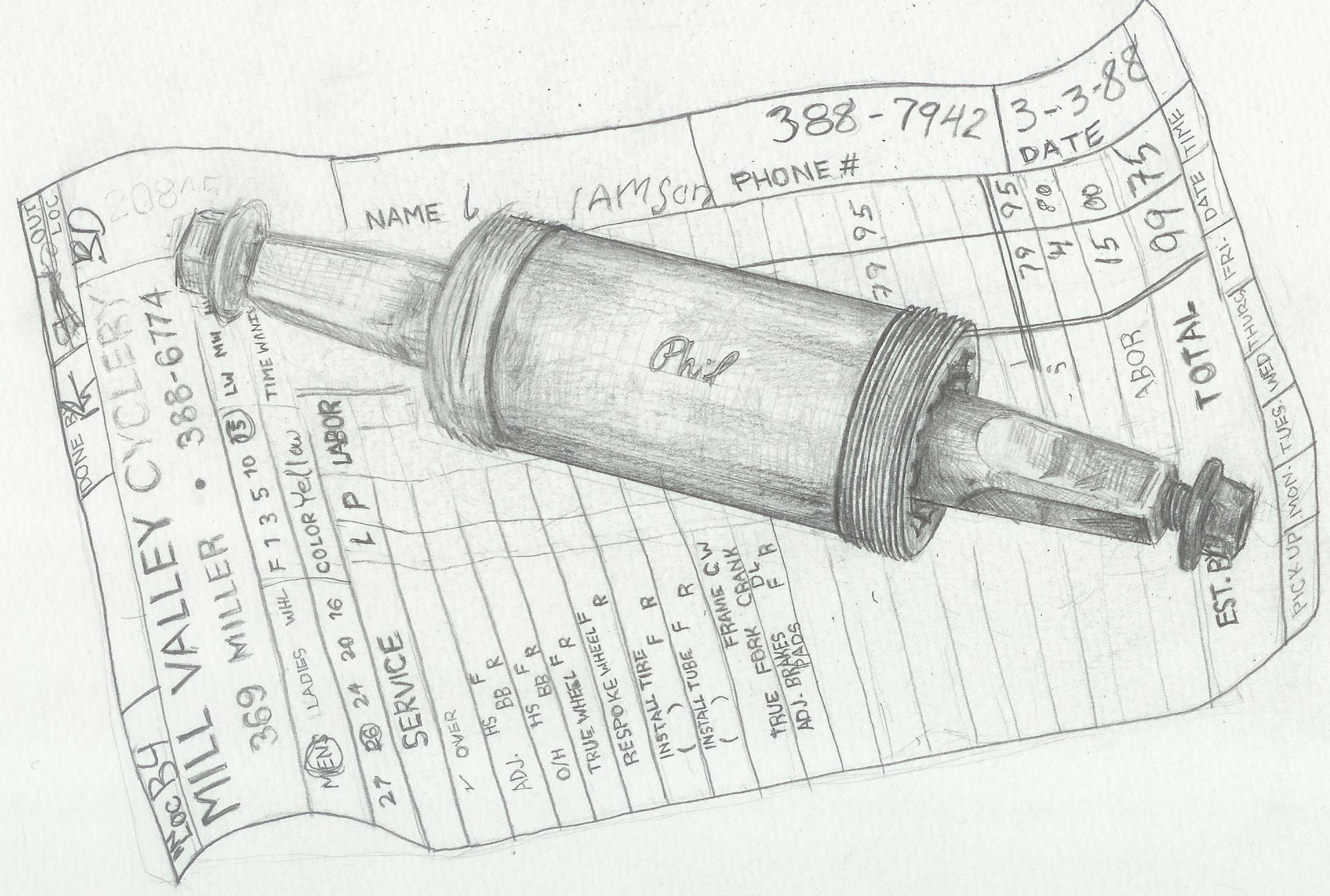
Vintage Phil Wood bottom bracket

Watercolor over pencil. I like this technique for the control I have, and the speed I can work at. Dirt Rag magazine commissioned it to promote their 20th anniversary in 2008. Twenty year old magazine, twenty year old bottom bracket, both legendary and long-lasting!

anime secretary

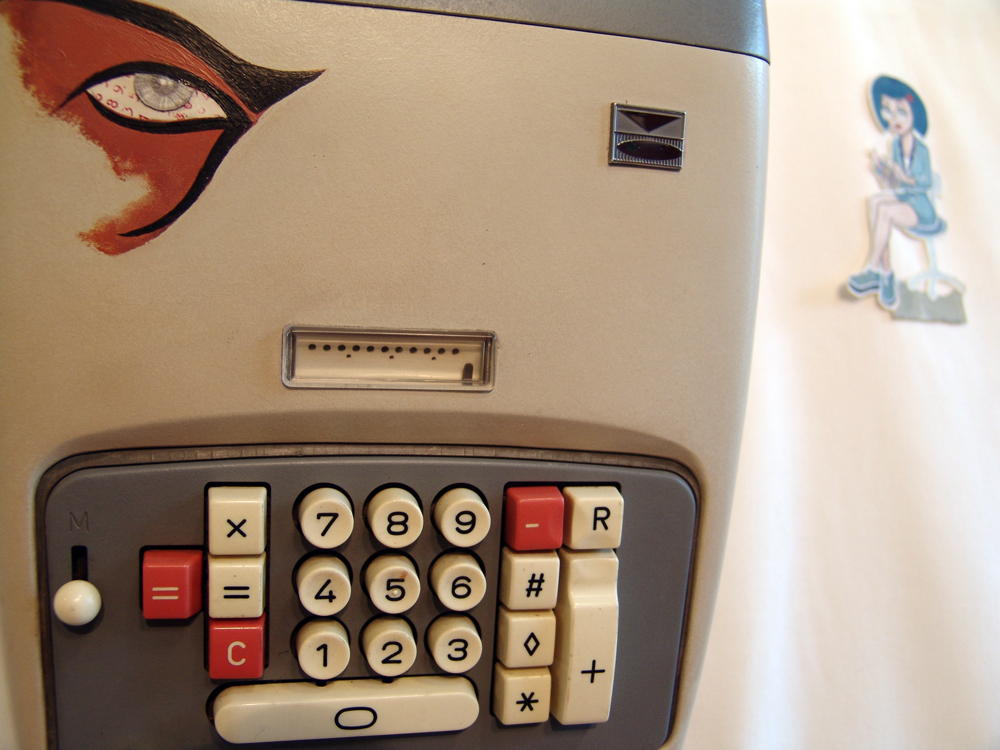
This painted and cut-out gouache on paper character goes with a Machine Mask sculpture I made from an old adding machine.

My Machine Mask sculptures are cast-off objects of the Industrial Age (vacuum cleaners, gas cans, adding machines) that I paint eyes on to create tribal masks.

Jimbert’s Story About Aliens

Game Concept Art

Concept sketches for game demos and a PlayStation2 environmental interface.

Concept art for…

  • a PSP side-scroller called “Wren 66″ where you fly your way through the vast and hostile mining infrastructure of Mars with a tiny jetfighter.
  • a game using an exercise bike to control your flying avatar in a networked social arena.
  • a roleplaying game called Stone Lords where you battle evil mind-controlling shape-shifters in flying cities.
  • “Zero Hour,” where you had to use construction machinery to clear a path for “the bomb truck.”
  • The first PlayStation2 demo disc interface.

Busy with bikes

This has been a great bike week.

Bicycle Times and Dirt Rag sent me to the Oregon Handmade Bike Show

Thusday, Friday and Saturday events

Also:

Roadster – multi-resolution vector graphics

A vector tracing of a pencil sketch, saved out of Photoshop at different sizes by changing the Image Size in the “Save for Web” export.

Wheelbird for Dirt Rag magazine

Character design and story boards

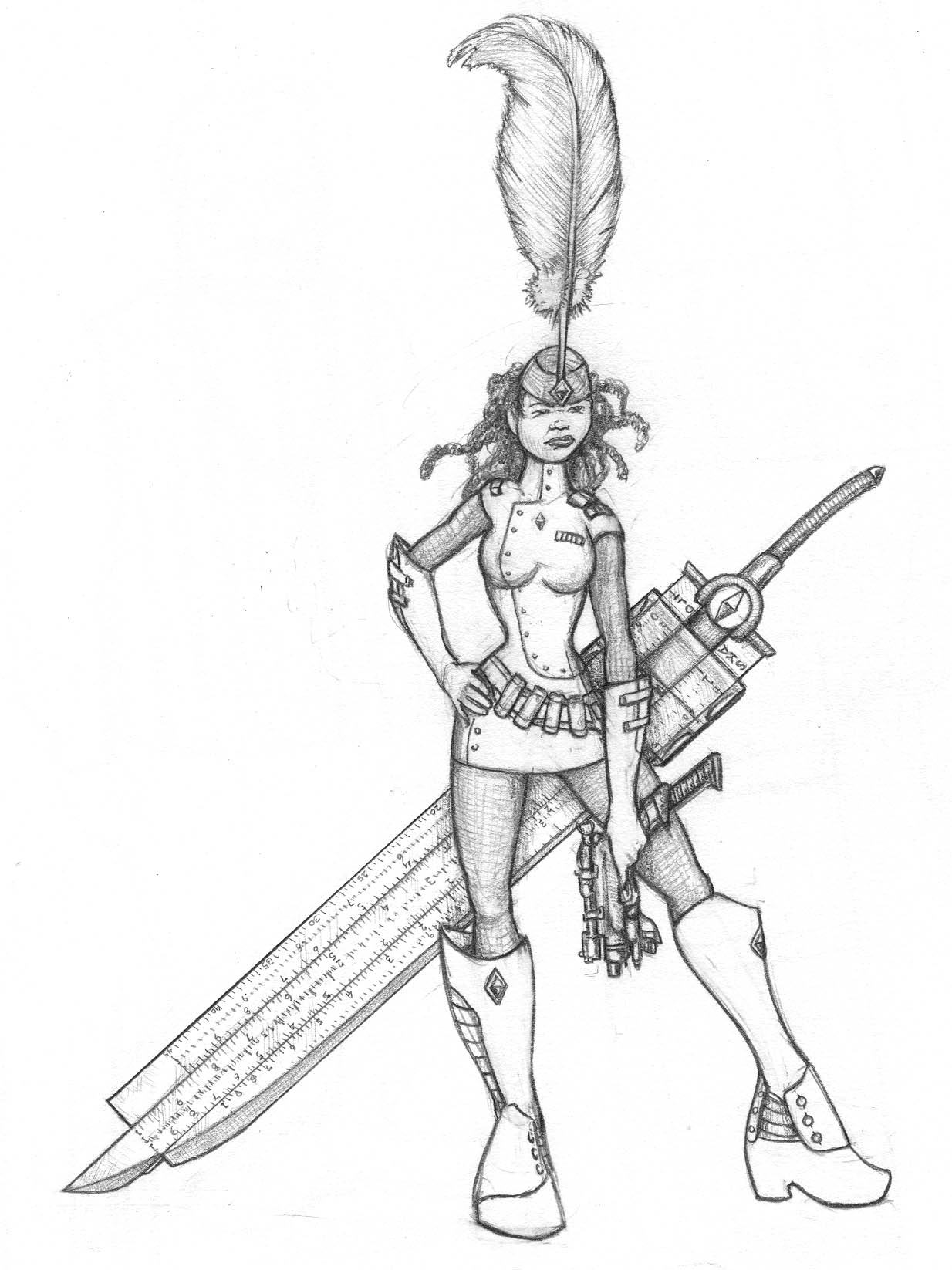
Maya pinup with a giant slide rule sword

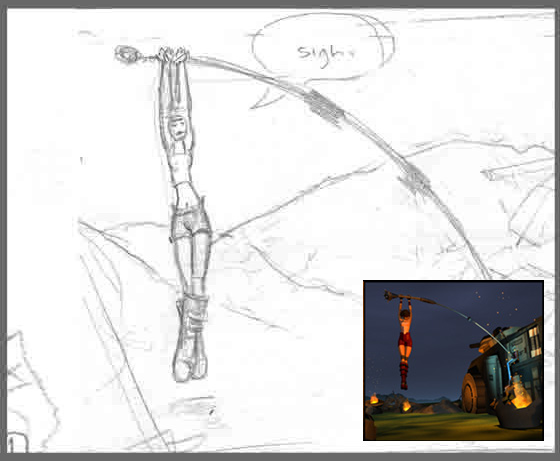
I wrote a story and designed the characters and settings for a an interactive PlayStation2 comic. Maya flees an attack on her school, and finds a suit of battle armor in the middle of a war zone. It betrays her.

I did the breakdown and drew the storyboards. The whole team helped with backstory and setting. We pitched it to Sony for the PlayStation Underground magazine. Models were built, and the final art was lit and rendered to match my layouts.


Dirt Rag magazine illustrations

Dirt Rag paradise cycles illustration for Last Chance For Gas

Bike Birds